
Early on, the more experienced drivers told us that speed was not what made a finisher in the 2026 Dakar Classic. I quickly realised that what we needed to reach the end was consistency, strategy, teamwork and lots of grit.
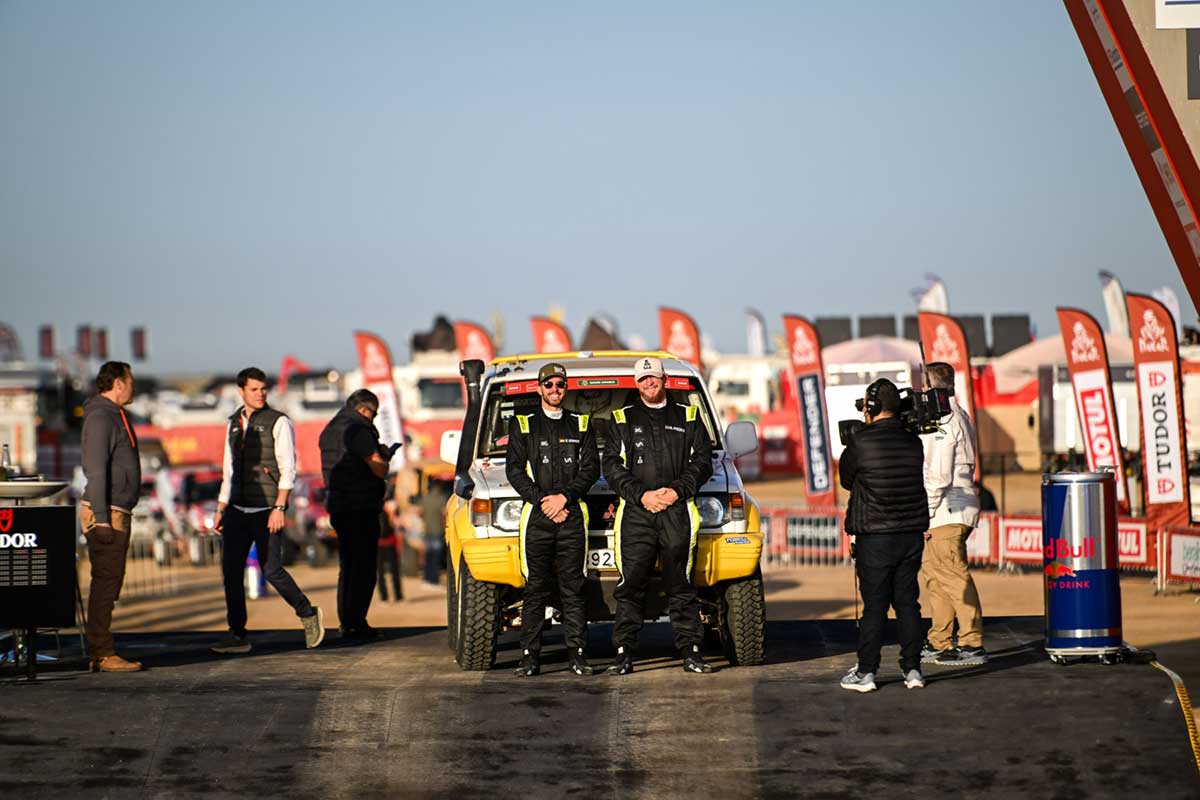
My business partner, Fran Gómez, and I were taking on the rally in a 1993 Mitsubishi Pajero. We started planning our speeds more carefully and thinking about how to look after the car mechanically. We looked for gentler routes where we could and were willing to sacrifice speed to protect the car. Each decision had to take account of what we would need from it for the rest of the rally.
I see the same need for preparation in my work in live event production at VA361 Productions. Equipment needs the appropriate care and preparation before you depend on it. If that work hasn’t been done, finding out during delivery is too late.
With the team, I need to understand how people are doing. Our production team already has a system, with tools and processes to do the job. What they need most from me is motivation, support and someone who listens.
For me, that starts with reading the room and understanding where the stress is being felt. I try to ask the right questions and read the person in front of me. What do they need from me right now? How can I help them move from stress or fear towards motivation? The response depends on the person and the moment. Sometimes humour helps. Sometimes I need to listen more carefully to understand what support is needed.
Fran and I needed that support from each other at Dakar. We used humour a lot, and when everything felt a bit too much, we would hand over and swap between driving and navigating. That change of role gave us some variation. We kept each other’s morale up and tried to lift each other when we were low on energy.
For a production team, it helps to discuss who can support whom before the job gets difficult. At your next crew briefing, ask where the most demanding stretches of the job will be and who can help if someone needs relief. Where a handover is possible, the person taking over needs the right skills and a clear understanding of the job. Our role swaps gave us a practical way to share the load.
There was also a commitment I had to make to myself. With a challenge this big, I think you need to make yourself a promise and decide you’re going to keep it. Whatever the day brings, you’re going to show up for yourself. Then you have to do it again the next morning.
The hardest moment came about three days from the end. After several 16-hour days in a row, extreme temperatures, very little sleep and high stress, I was exhausted. One morning, facing another 16-hour day after only three hours’ sleep, with a damaged car and me running on fumes, I considered not getting up to continue. But I had promised myself I would finish. So, I got up and dealt with each challenge as it came.
On a production, I want people to be able to tell me when they’re struggling. They need to know I’ll listen and help them work out what to do. That means paying attention to the signs as well as what people say.
When we reached the finish line, I was proud of the full process. I was proud of Fran, our mechanics and the whole team. I was also proud of our colleagues whose car had rolled on the second day and who had to abandon the rally. They were part of the team I was proud of, even though their race had ended early.
I was proud that we had stuck to the plan and seen the project through to the end. All the decisions about pace, the care for the car, the changes of role and the encouragement between us were part of getting there. I had kept my promise to myself, and I knew how much the team had helped me do it.
A personal suggestion that might help on your next production is pretty simple: while checking progress during the build and making sure everything is on schedule, try asking, “How are you getting on? Is there anything I can do to make things move along more easily for you?”
You might spot a way to work more efficiently that is harder to see when someone is dealing with a heavy workload. They might also benefit from strategic input or help deciding what to prioritise.
Let the person and the situation guide what you bring to the equation to help the production keep moving. For me, that is how helping and supporting your team becomes part of getting the project to the finish line.
Photos: Jesús Pérez @Chuseto