

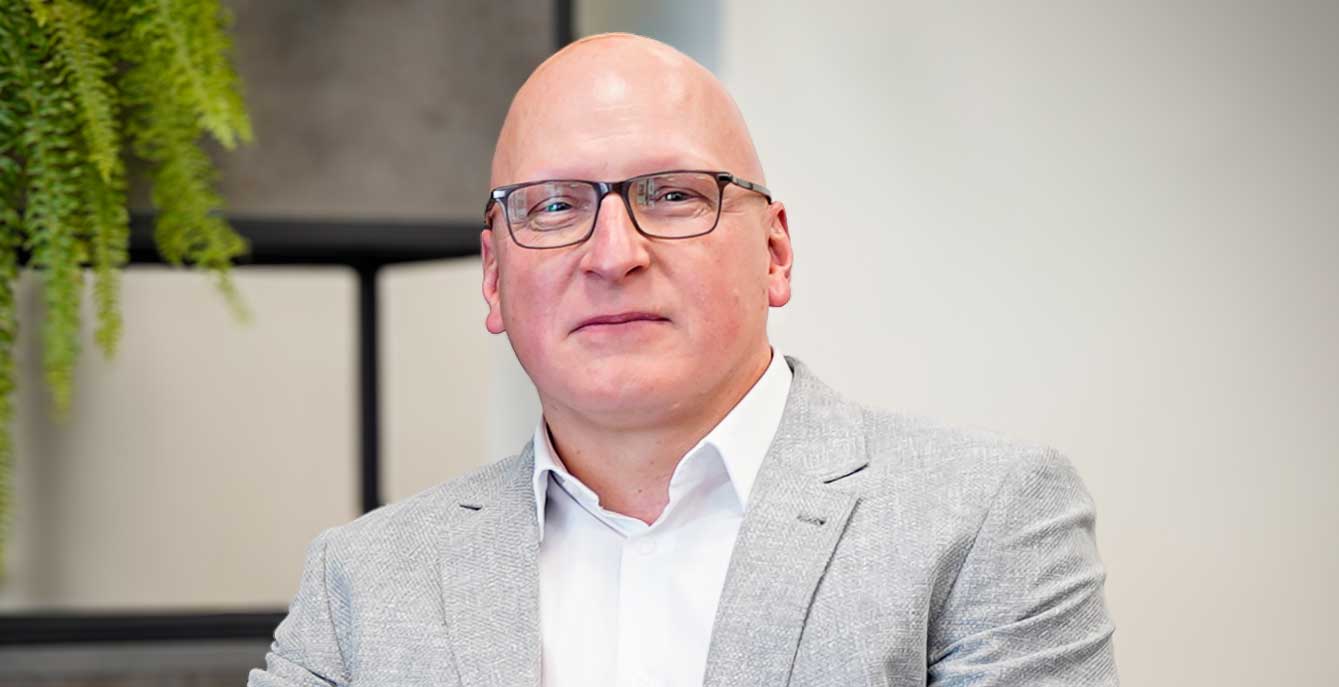
With a long history as a business owner and experience managing teams responsible for delivering some of the world’s largest and most prestigious sporting events, when it comes to major projects on the global stage, Eoghan Gill knows better than most what works and what doesn’t.
That experience ultimately led him to JAM, initially through collaboration on Expo 2020 Dubai, where he supported the training of 25,000 staff and many projects thereafter.
Fast-forward to Q4 of 2025, and Gill took the “natural next step” of joining the company full-time. Now, as Managing Director for KSA, Gill is bringing his global expertise to one of the world’s fastest-growing events markets.
What attracted you to the Middle East, and specifically Saudi Arabia?
From a business perspective, the Middle East – and Saudi Arabia in particular –offers huge opportunities within the events sector. Since joining JAM, it’s been a real eye-opener in terms of the scale and ambition of projects here.
JAM has operated successfully here since 2018, and with me and a few other key senior team members relocating permanently to Riyadh, we are able establish a permanent senior management presence in the Kingdom. It’s important for us to continue to be seen as a local partner rather than an external supplier. We continue to invest heavily in hiring Saudi talent, particularly graduates, and contributing to the broader Saudisation initiative. That local integration is key to long-term success.
How would you describe JAM’s offerings across multiple verticals today?
JAM is an interesting business because it spans three key verticals: Safety, People, and Training.
We’re still widely known as a safety and crowd management company, but our offering is much broader. JAM People covers both event staffing and recruitment – from entry-level roles to senior leadership. Meanwhile, our Training division has solidified itself as a NEBOSH Gold Certified Training Partner and a Highfield Gold Certified Training Centre, which reinforces our credibility in workforce development.
What we’re continuing to build is effectively a one-stop shop. We can provide safety consultancy, recruit staff, train both new and existing teams, and deliver workforce development through tailored training programmes. That integrated approach is particularly valuable in today’s market.
How is JAM embedding itself locally in Saudi Arabia?
Local engagement is critical. We’ve already hired around 15 graduates from programmes we’ve supported in Saudi Arabia, including MDLBEAST’s BeastEd Career Path Programme, and we’re continuing to invest in developing local talent.
We’re not just delivering services; we’re building a local ecosystem, including training, employment opportunities, and long-term career pathways in an industry that’s still relatively new in the Kingdom.
By doing this, we’re strengthening our position as a trusted local partner while also contributing to the growth of the sector.
Given the current global climate, how do you see the events industry evolving in the region?
Geopolitical tensions are causing uncertainty, but the key consideration is how that impacts tourism and major events across the GCC.
The industry is resilient; historically, it tends to bounce back quickly. Promoters and organisers will adapt, and I expect we’ll see momentum return – though it may take some time.
Saudi Arabia is in a strong position because it’s not solely reliant on international tourism. There’s significant domestic demand, alongside major infrastructure and entertainment projects that will continue to drive growth.
What opportunities do you see specifically within Saudi Arabia’s events landscape?
There’s an incredible pipeline of projects – Qiddiya, Sports Boulevard, King Salman Park, and many more. Beyond Riyadh, many other KSA cities are also developing rapidly.
Major events, such as the AFC Asian Cup in 2027, will bring international audiences, and all of this builds towards larger long-term ambitions, including Expo 2030. The medium-to-long-term outlook is very positive.
How does your experience working on some of the world’s biggest events translate to Saudi Arabia?
A lot of my experience comes from large-scale global events like the London 2012 Olympics, where I oversaw teams of up to 2,500 staff and thousands of volunteers across high-profile venues.
Those roles involve building, training, and deploying large workforces, and ensuring every touchpoint, from security to guest services, contributes to the overall visitor experience.
That’s something we’re bringing into JAM: the ability to scale human infrastructure effectively and deliver consistent, high-quality experiences across major events.
How important is the ‘people’ element in delivering successful events?
It’s everything. The people are both the first and last impression of any event.
Every interaction, whether it’s front of house staff, security, wayfinding, accreditation, or parking, shapes the visitor experience. These touchpoints are opportunities to contribute to the overall storytelling of the event.
As audiences increasingly seek immersive experiences, the role of well-trained, engaged staff becomes even more critical.
What are the key challenges when delivering large-scale international events?
One of the biggest challenges is that timelines are fixed. Major international tournaments and events cannot be delayed. That means having robust systems in place for recruitment, training, deployment, and operations. There’s no margin for error.
What’s changed significantly is the role of digital platforms and social media. Today, we can engage with a network of over 100,000 people through JAM’s channels, which dramatically improves our ability to scale quickly.
How do you adapt global best practices to local markets like Saudi Arabia?
There are always universal principles – things like operational structure, training frameworks, and service standards. However, every market has its own cultural nuances.
The key is to immerse yourself in the local culture, respect it, and build your approach around it. That includes hiring locally, developing local supply chains, and understanding social dynamics. Ultimately, success comes from combining global expertise with genuine local integration.
What excites you most about the future?
What excites me most is the opportunity to help shape the next generation of event professionals in Saudi Arabia. I know this has been a focus for JAM for many years.
We’re seeing the emergence of a rapidly growing industry in the Kingdom, and with that comes the chance to build sustainable career pathways for local talent.
If we can combine that with the scale of projects happening here, the future is incredibly promising – not just for JAM, but for the entire events sector in the region.
Photos: JAM Event Services